
Car Stuck in Snow – How to Get Your Car Moving Safely
Winter weather can catch even experienced drivers off guard. Heavy snowfall, snowbanks left by snowploughs and slippery roads can leave your car stuck in a snowdrift or parking space. Even if the wheels are spinning, the vehicle may not move.

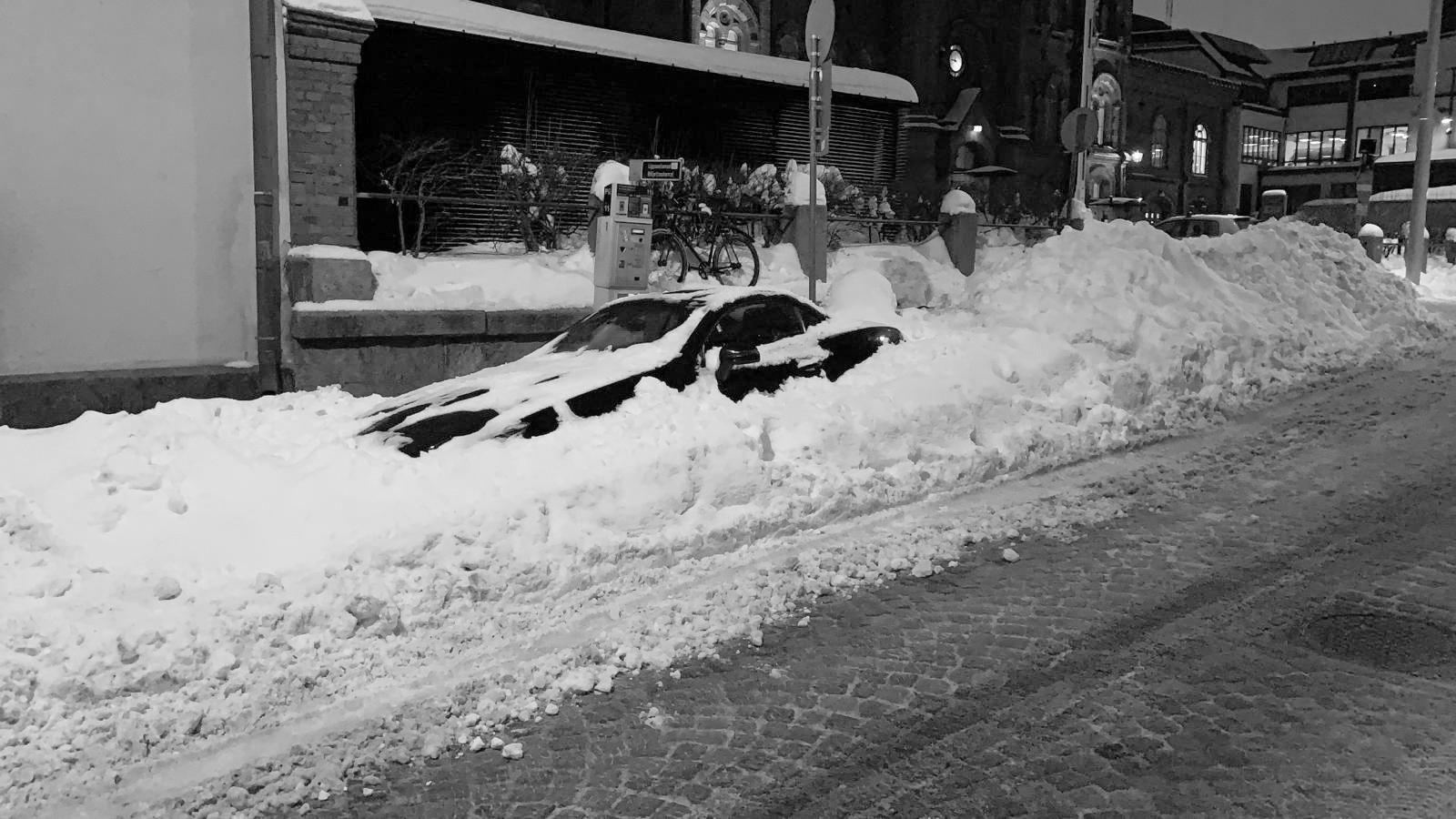
How to get the car moving safely
Fortunately, a car stuck in snow can often be freed using the right techniques. The most important thing is to stay calm and avoid excessive acceleration, which can make the situation worse. If your own efforts are not enough, we can help recover your vehicle safely and efficiently – 24 hours a day, throughout Finland.
Car Stuck in Snow – What Should You Do First?
When your car will not move forwards or backwards, your first instinct may be to press the accelerator harder. However, this can cause the wheels to spin and dig even deeper into the snow.
Before trying again, check the area around your vehicle and identify what is preventing it from moving.
1. Clear Snow Away from the Wheels
Start by shovelling snow away from the front and rear of the driven wheels. Create enough space around the tyres to allow the vehicle to move in either direction.
If your car is stuck in a snowbank left by a snowplough, remove as much compacted snow as possible before attempting to drive away..
2. Check Whether the Underside of the Car Is Resting on Snow
If the underside of your vehicle is resting on a thick layer of compacted snow, the tyres may not have enough traction to move the car.
Carefully remove snow from underneath the vehicle if it is safe to do so. Avoid damaging underbody components, cables or other sensitive parts. Never crawl underneath the vehicle.
3. Try Moving Off Gently
Apply the accelerator gently and keep the front wheels as straight as possible. Excessive acceleration can easily cause the tyres to spin.
If the vehicle moves slightly, you can try gently rocking it forwards and backwards. However, check your owner’s manual first to ensure this technique is suitable for your vehicle’s transmission. Never change between forward and reverse gears while the vehicle is still moving.
4. Improve Tyre Traction
If your tyres are spinning on an icy or snowy surface, try improving traction with suitable traction aids or grit.
Even a small improvement in grip may be enough to get your vehicle moving again.
5. Check the Traction Control System
In some vehicles, traction control may limit wheelspin to the extent that moving off in deep snow becomes difficult.
Depending on the manufacturer’s instructions, temporarily disabling traction control may help in certain situations. However, electronic stability control should not be switched off unnecessarily. Restore all systems to their normal settings as soon as the vehicle has been freed.
Car Stuck in a Parking Space – How to Get Past a Snowbank
Heavy snowfall and snow-clearing operations can leave large snowbanks around parked vehicles. Cars parked along streets are particularly vulnerable to becoming surrounded by compacted, icy snow.
If your car is stuck in a parking space, first determine the safest direction to exit. In many cases, removing the snowbank with a shovel is easier and safer than attempting to drive over it.
Do not try to force your vehicle through a high snowbank. Compacted snow and ice can damage the bumper, underbody or other vehicle components.
If the snowbank is too large to remove manually or your car is already stuck, we can help recover it. Using professional winching equipment, we can get your vehicle moving again while minimising unnecessary strain on its components.
When Should You Call for Professional Vehicle Recovery?
Not every situation should be handled without professional assistance. If your vehicle is deeply embedded in snow, the tyres have dug themselves into holes or the underside is resting on compacted snow, repeated attempts to move it may cause additional damage.
You should consider calling for professional assistance when:
- Your vehicle will not move even after clearing snow from around the tyres.
- Your car is stuck in a deep snowdrift or a large snowbank.
- The tyres keep spinning without gaining enough traction.
- Your vehicle is in a dangerous location or obstructing other traffic.
- Attempting to free the vehicle yourself could cause damage.
We have extensive experience recovering different types of vehicles in challenging winter conditions. We assess the situation, determine the most suitable recovery method and dispatch the appropriate equipment.
Winching a Car Out of Snow – A Safe and Effective Recovery Method
When a vehicle is too deeply stuck in snow to be freed without assistance, winching is often an effective solution.
Winching involves carefully pulling the vehicle out of a snowdrift or other obstacle using specialised recovery equipment. Correct attachment points and professional handling are essential to prevent unnecessary strain or damage to the vehicle.
Not every vehicle stuck in snow needs to be towed to a repair shop. In many cases, simply recovering the vehicle is enough for the driver to continue their journey.
If the vehicle cannot be safely driven after recovery, we can also arrange towing to a suitable destination.
Does Car Insurance Cover Snow Recovery?
The cost of recovering a vehicle stuck in snow is not necessarily covered by car insurance.
Coverage depends on your insurance provider, the type of policy you have and the circumstances of the incident. For example, winching a vehicle that has slid off the road may be treated differently from recovering a car stuck in snow in a parking space.
If you are unsure whether your insurance covers the recovery, we can help you find out. Our customer service team can assist with insurance-related questions and help you find the most suitable solution for your situation.
Modified:
Frequently Asked Questions About Cars Stuck in Snow
First, clear snow from around the wheels and check whether the underside of the vehicle is resting on snow. Try accelerating gently and improving tyre traction if necessary. If the vehicle still will not move, it is best to seek professional assistance before making the situation worse.
In some automatic vehicles, gently moving forwards and backwards may help. However, this technique is not suitable for every transmission. Always follow the manufacturer’s instructions and never change direction while the vehicle is moving.
Yes. Four-wheel drive improves traction and mobility, but it does not prevent a vehicle from becoming stuck in deep snow. If the underside rests on compacted snow or the tyres lose traction, even a four-wheel-drive vehicle may require professional winching assistance.
The cost depends on factors such as the vehicle’s location, the complexity of the recovery, the equipment required and the time of service. For the most accurate price estimate, contact our customer service team.
Using incorrect towing points or unsuitable equipment can cause significant damage. Sudden jerking movements and uncontrolled pulling should be avoided. The safest option is to use appropriate recovery equipment and professional assistance.