
Car Won’t Start? Common Causes and Solutions
Your car won’t start, but you need to get moving? Starting problems can happen unexpectedly, whether you’re at home, in a car park or in the middle of a journey. A flat or weak battery is one of the most common causes, but the problem may also involve the starter motor, fuel system or vehicle electronics.

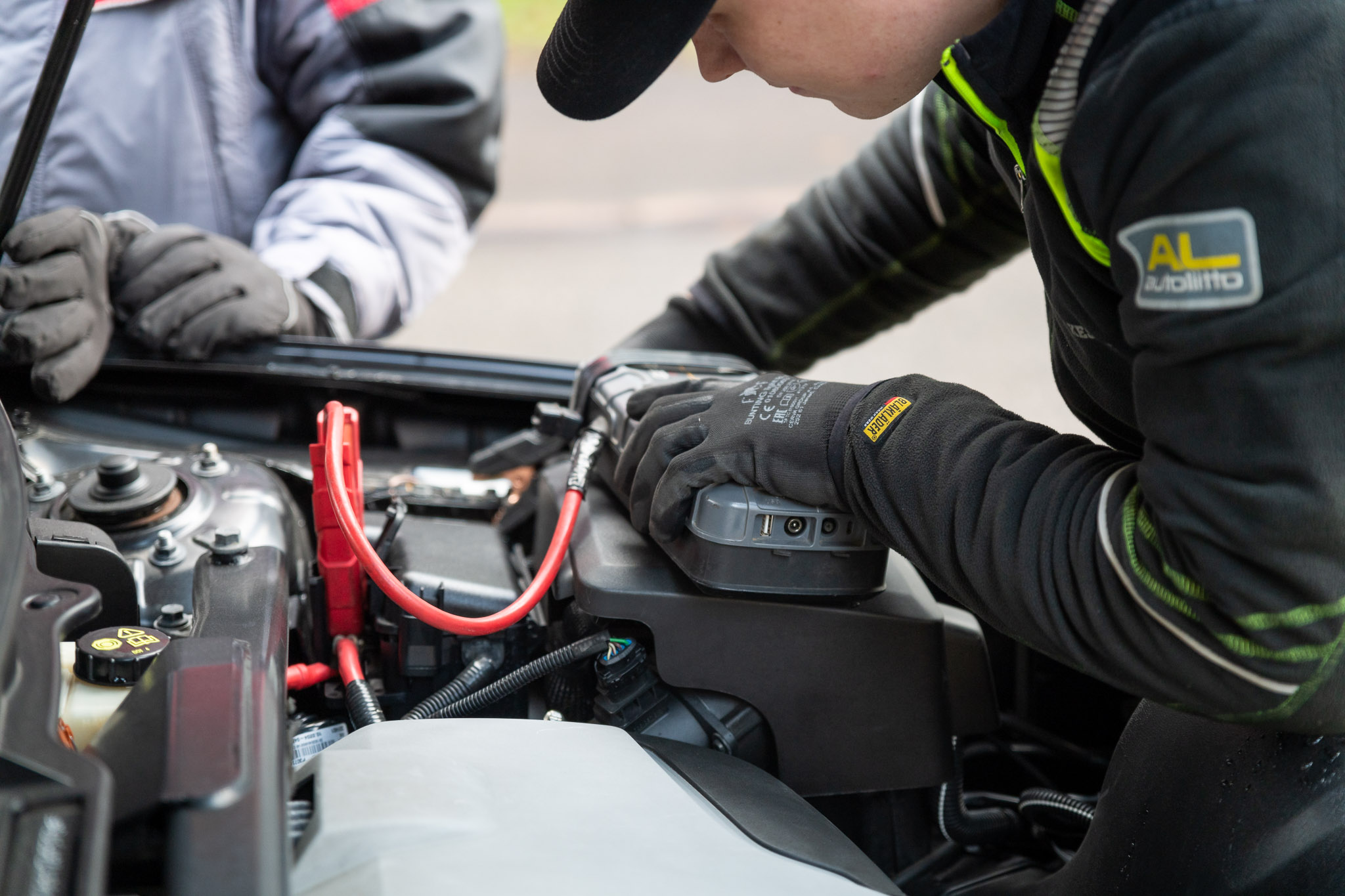
Most common causes of and solutions for car starting problems
When your car refuses to start, the most important thing is to identify the cause and find the right solution. We provide professional roadside assistance 24/7 throughout Finland. We’ll assess the situation and get your vehicle back on the road whenever possible.
Why Won’t My Car Start? 5 Common Causes
There are several reasons why a car may fail to start. The way your vehicle behaves when you try to start it can often provide useful clues about the problem.
1. Your Car Battery Is Flat
A flat battery is one of the most common reasons for starting problems. If your car won’t crank, the dashboard lights become dim or you hear a clicking sound when turning the key, the battery may not have enough charge.
Common reasons for a flat battery include:
- Frequent short journeys that don’t allow the battery to recharge sufficiently.
- Leaving the vehicle unused for an extended period.
- Leaving lights or electrical equipment switched on.
- An ageing battery that can no longer hold its charge.
- A fault in the vehicle’s charging system.
Solution: If the battery is simply discharged, a jump start may be enough to get you moving again. However, if the battery can no longer hold a charge, it may need replacing.
2. Your Car Makes a Clicking Sound but Won’t Start
If you hear rapid clicking when attempting to start your car, the battery voltage may be too low to operate the starter motor.
A single, louder click may indicate a problem with the starter motor or its electrical connections.
Solution: The battery and starting system should be checked before replacing any components. Our roadside assistance team can help determine whether a jump start will solve the problem or whether further diagnostics are needed.
3. The Engine Cranks but Won’t Start
If the starter motor turns the engine normally but the engine fails to start, the battery may not be the cause.
Possible reasons include:
- Fuel delivery problems
- Ignition system faults
- A faulty crankshaft or camshaft position sensor
- Engine management or immobiliser problems
- Running out of fuel
Solution: If the engine cranks normally but won’t start, avoid repeated, prolonged starting attempts. Professional vehicle diagnostics can help identify the fault and determine whether the vehicle can be repaired on-site or needs towing to a repair workshop.an ongelman ja arvioimaan, voidaanko auto korjata paikan päällä vai tarvitaanko hinaus korjaamolle.
4. Your Car Won’t Start in Cold Weather
Freezing temperatures put additional strain on your vehicle’s battery and starting system. Cold weather reduces the battery’s ability to deliver starting power, while the engine may require more energy to start.
Older or partially discharged batteries are particularly vulnerable to freezing temperatures.
Diesel vehicles may also experience starting difficulties due to glow plug system faults or problems related to the cold-weather properties of diesel fuel.
Solution: If your car won’t start in freezing conditions, it’s worth having the battery checked. We can provide a jump start or replace the battery on-site when necessary. A frozen battery must never be jump-started.
5. Your Car Won’t Start When the Engine Is Warm
If your car starts normally when cold but refuses to start once the engine is warm, the problem may involve a temperature-sensitive fault in the engine sensors, fuel system or electrical components.
A weakening starter motor or faulty electrical connections can also cause problems that only appear when the engine is warm.
Solution: Recurring starting problems should be investigated as soon as possible. Vehicle diagnostics can help identify the cause and prevent unexpected breakdowns.
What Should You Do If Your Car Won’t Start?
If your vehicle refuses to start, a few simple checks may help you understand the situation.
- Check the dashboard lights. If the lights are dim or don’t come on at all, the battery may be discharged.
- Listen to the sound when starting. Clicking, slow cranking or complete silence can indicate different types of problems.
- Check the starting conditions. In an automatic vehicle, the gear selector usually needs to be in P or N. Make sure the brake or clutch pedal is pressed according to the manufacturer’s instructions.
- Check the fuel level. If the engine cranks but won’t start, make sure you haven’t run out of fuel.
- Avoid repeated starting attempts. If the car doesn’t start after a few attempts, continuing to crank the engine may drain the battery further.
If these checks don’t solve the problem, contact our roadside assistance team. We’ll help assess the situation and arrange the right assistance.
Jump-Starting a Car – When Is It the Right Solution?
When a flat battery is causing the problem, jump-starting is often the quickest way to get your car moving again.
However, jump-starting requires care. Modern vehicles have complex electrical systems, and incorrect connections or unsuitable equipment can damage sensitive electronic components.
It’s important to follow the vehicle manufacturer’s instructions, use the correct connection points and ensure that the jump-starting equipment is suitable for the vehicle.
We provide professional jump-start assistance around the clock. Our technicians use appropriate equipment and take the vehicle’s technical requirements into account.
Please note: A jump start may not provide a permanent solution. If the battery is in poor condition or the charging system is faulty, the vehicle may fail to start again.
When Should You Replace Your Car Battery?
A car battery is a wear-and-tear component. Its lifespan depends on factors such as driving habits, temperatures and the electrical demands of the vehicle.
You should consider having your battery checked or replaced if:
- The engine repeatedly cranks slowly.
- The battery keeps going flat without an obvious reason.
- Your vehicle frequently needs jump-starting.
- The battery no longer holds its charge properly.
- A battery health test indicates deterioration.
Our mobile battery replacement service helps when your existing battery has reached the end of its service life. We’ll assess its condition and, when necessary, install a suitable replacement battery at your location.
This means you may not need to take your vehicle to a repair workshop at all.
What If Your Car Still Won’t Start After a Jump Start?
If your vehicle doesn’t start even with jump-start assistance, the problem may be caused by something other than a discharged battery.
Faults in the starter motor, charging system, fuel system or engine management system can all prevent a vehicle from starting.
In these situations, vehicle diagnostics can help identify the problem. If the fault cannot be resolved on-site, we’ll arrange safe towing to a suitable repair workshop.
Our priority is always to find the most practical solution for your situation. If we can safely get your vehicle running again at the roadside, unnecessary towing can be avoided.
Modified:
Frequently Asked Questions About Car Starting Problems
Even if the dashboard lights and other electrical equipment work, the battery may not have enough power to start the engine. The problem could also involve the starter motor, electrical connections, fuel system or vehicle electronics.
A clicking sound often indicates a weak battery or a problem with the starting system. If the battery is discharged, a jump start may help. If the problem continues, further diagnostics are recommended.
Yes, provided you have suitable equipment and follow the vehicle manufacturer’s instructions. However, incorrect connections can damage the vehicle’s electrical system. If you’re unsure, it’s safer to leave the jump-starting to a professional.
The time required to recharge the battery depends on its condition, charge level, temperature and the vehicle’s charging system. A short drive may not be enough to restore the battery’s charge. If the battery has been deeply discharged, external charging or a battery health check may be necessary.
Many comprehensive car insurance policies in Finland include roadside assistance cover for technical faults and starting problems. Coverage depends on your insurer and the terms of your policy. Our customer service team can help you check what your insurance covers.