
Car Battery Dead? What to Do When Your Car Won’t Start
A dead car battery can catch you by surprise, often when you need to get somewhere. Cold temperatures, short journeys and an ageing battery are among the most common causes of starting problems. Fortunately, a flat battery does not always mean a major mechanical issue. In this guide, we explain why car batteries lose their charge, how to prevent battery problems and what to do when your car won’t start.

Why Does a Car Battery Go Flat?
Your car battery provides the electrical power needed to start the engine and operate the vehicle’s electrical systems. Starting the engine requires a significant amount of energy, which the vehicle’s charging system replenishes while driving.
If the battery does not recharge sufficiently or its capacity has deteriorated, it may no longer have enough power to start the engine.
Short Journeys Put Extra Strain on the Battery
Frequent short journeys are one of the most common factors contributing to battery problems. Starting the engine consumes energy, but driving just a few kilometres may not be enough to replace the charge used.
This is particularly common in winter, when heating and other electrical systems increase energy consumption. If you mainly drive short distances, we recommend having your battery checked regularly and using a suitable battery maintenance charger when necessary.
Cold Weather Reduces Battery Performance
Cold temperatures put additional strain on car batteries. In freezing conditions, a battery’s ability to deliver starting power decreases, while a cold engine requires more energy to start.
An older or already weakened battery may struggle to start the vehicle during the first severe frosts of winter.
Preheating the engine can make starting easier, while maintaining a sufficient battery charge and keeping the battery in good condition helps improve reliability.
Electrical Equipment Drains Battery Power
Modern vehicles contain numerous electrical systems. Interior lights, auxiliary heaters and other electrical equipment can continue consuming battery power even when the engine is switched off.
If an electrical device is accidentally left running, the battery may discharge completely overnight.
How Can You Tell If Your Car Battery Is Dead?
A weakening battery often shows warning signs before the vehicle stops starting altogether.
Common symptoms include:
- The engine cranks more slowly than usual.
- The car won’t start, or you only hear a clicking sound when turning the key or pressing the start button.
- Headlights and interior lights appear dimmer than normal.
- Dashboard lights flicker or electrical systems behave unexpectedly.
- The vehicle struggles to start, particularly in cold weather.
These symptoms can also indicate other issues, such as a faulty starter motor or charging system. If starting problems occur repeatedly, it is important to identify the underlying cause.
What to Do When Your Car Battery Is Dead
If your car won’t start because of a flat battery, the problem can often be resolved without towing.
1. Check the Vehicle’s Electrical Equipment
Make sure the headlights, interior lights and other electrical devices have been switched off. However, if the battery has already discharged, turning off these devices may not provide enough power to restart the engine.
2. Recharge the Battery
A discharged battery can often be recharged using a suitable battery charger. Always follow the vehicle and battery manufacturer’s instructions and ensure the charger is compatible with the battery type.
Charging may take several hours, depending on the battery’s condition, capacity and the charger’s output.
3. Request Professional Jump-Start Assistance
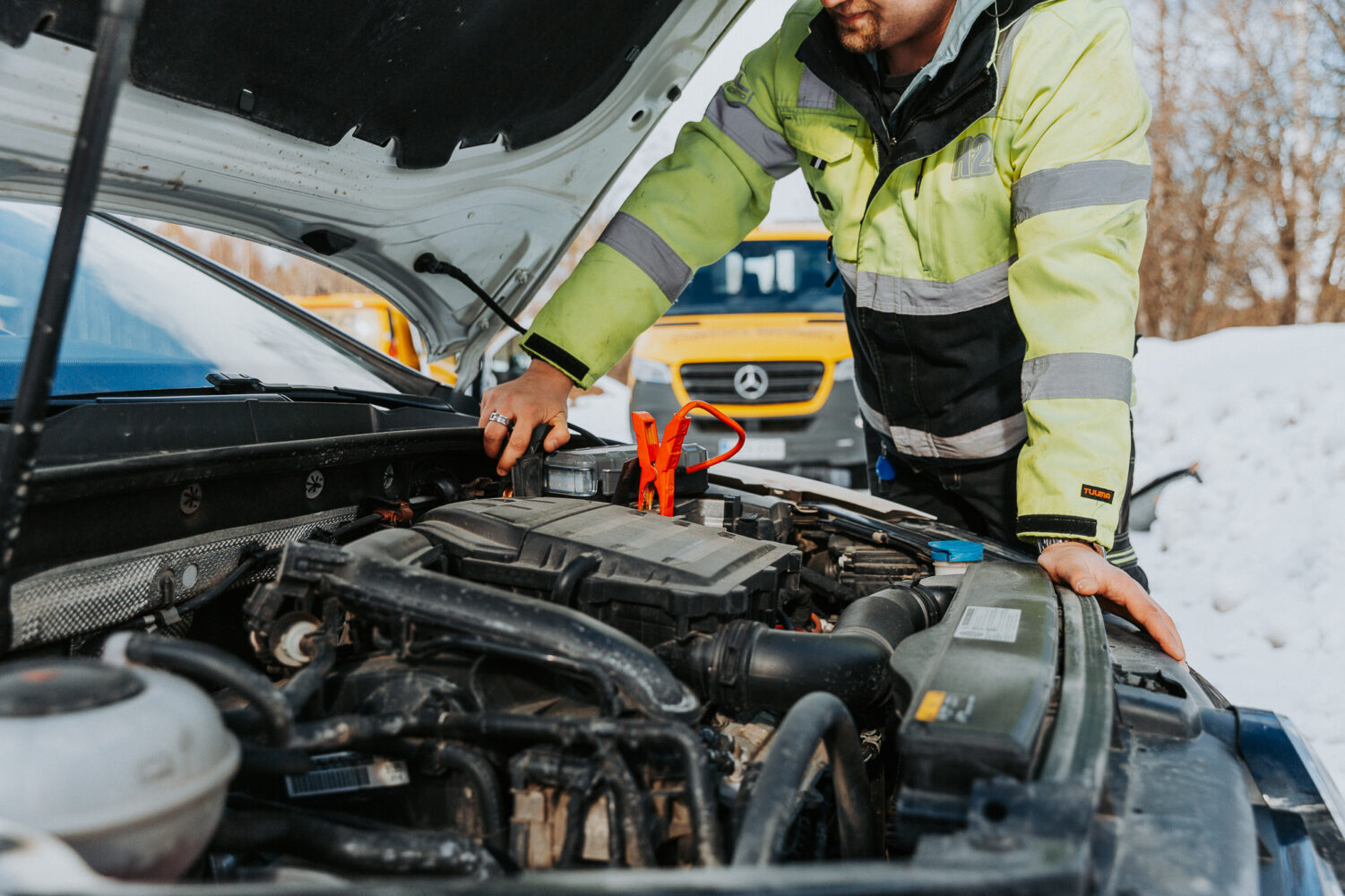
If your car won’t start and charging the battery is not possible, we can help on-site. Our roadside assistance professionals can provide jump-start assistance and assess whether any further action is required.
4. Have the Battery Checked
If your battery repeatedly loses its charge or your vehicle struggles to start, the underlying cause should be investigated. An old or damaged battery may need replacing, but the problem could also be related to the vehicle’s charging system.
How to Prevent Your Car Battery from Going Flat
A few simple precautions can help extend battery life and reduce the risk of unexpected starting problems.
- Keep the battery charged. If you frequently drive short distances, periodically charging the battery with a suitable charger can help prevent problems.
- Check the battery’s condition. Before winter, make sure the battery has sufficient starting power.
- Avoid unnecessary electrical consumption. Switch off electrical equipment when the engine is not running.
- Use engine preheating when appropriate. Preheating can make starting easier in cold conditions.
- Consider the battery’s age. Battery lifespan depends on quality, operating conditions and electrical load. Older batteries should be checked regularly to ensure reliable performance.
Dead Car Battery? We’re Here to Help 24/7
When your car battery goes flat and you cannot continue your journey, professional assistance is available around the clock.
We provide jump-start services and roadside assistance throughout Finland, 24 hours a day, seven days a week.
Our team can come directly to your location, provide the necessary starting assistance and assess whether your vehicle is safe to drive.
If the battery needs replacing or another fault is identified, we will help you find the most suitable solution.
Car battery dead? Call 0800 911 911 – we’re here to help 24/7.
Modified:
Frequently Asked Questions About Dead Car Batteries
Yes. Interior lights left on, faulty electrical equipment or an already weakened battery can cause the battery to discharge overnight.
If the battery does not have enough power to start the engine, the vehicle will usually need a jump-start or battery charging. Always follow the vehicle manufacturer’s instructions when jump-starting a car.
Charging time depends on the battery’s capacity, current charge level and the charger being used. Fully charging a battery can take several hours or even more than a day.
Not necessarily. If the battery is otherwise in good condition, recharging it may be sufficient. However, if the battery repeatedly goes flat or its capacity has deteriorated, replacement may be necessary.
In many cases, yes, provided the engine starts normally and the charging system is functioning correctly. However, a successful jump-start does not mean the battery has been sufficiently recharged.
If the charging system is faulty, continuing to drive may not be safe.